GAME DEVELOPMENT | CONCEPT | USER INTERFACE
The St. Pölten University of Applied Sciences has established the modern research laboratory ReMoCap-Lab (Laboratory for Capturing Motion and Augmenting Environment in Motor Rehabilitation). This lab brings together experts from the fields of AR/VR, machine learning and visual analytics with clinical experts and movement scientists in an interdisciplinary team to explore innovative treatment options in motor rehabilitation.
AVATAR is a continuation of the work of the ReMoCapLab and within this framework we have developed an exergame that can support patients in rehabilitation and therapy after amputation. In the following video you can see a gameplay of the exergame. You can find more detailed information below the video.
Objectives
AVATAR combines state-of-the-art motion capture technology with virtual reality. The idea is to capture the movement of patients in three-dimensional space by means of motion capture. This data is transferred in real time to a VR environment, which is made available to the patients with the help of a head-mounted display. In the VR environment, this information can then be used to obtain feedback on biomechanical aspects such as movement execution during the practice of therapeutic exercises.
At the same time, gamification aspects can significantly increase the fun and motivation of patients during therapy. The aim was to take this up and develop an exergame together with Maximilian Dollischal, Vera Feuchtgruber and Yannick Zanyath. Exergames are computer games that require physical movements and reactions. The aim of this small research project was to find out whether a VR application can support patients during their rehabilitation and therapy.
Concept
During the conception, it was particularly important to consider the special use case of the VR application. The aim of this exergame is for patients to forget about their prosthesis while playing and for the weakened side to be loaded with the same safety as the healthy side. By nature, trust in this foreign body is usually not present and must first be built up. This is exactly the point where the exergame is supposed to help the patients. The aim is to build up this trust through playful enjoyment or at least to find out whether games of this kind achieve the desired supportive effect.
Implementation
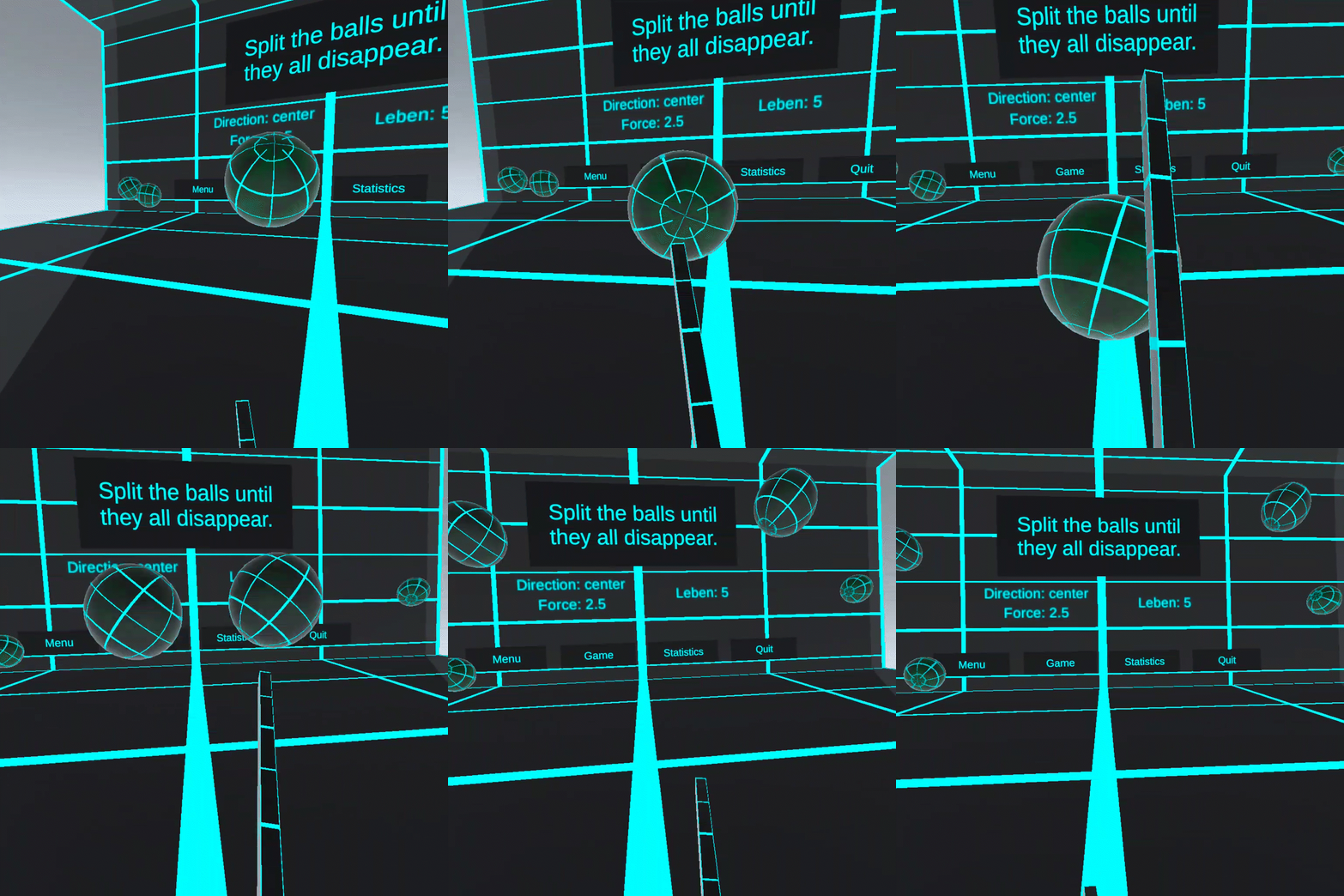
The idea of the exergame was that balls would come towards the player and he was supposed to break them up. Originally, the player was supposed to split them with a laser beam aimed at the VR controller. If such a ball is hit, the ball splits into two more. The direction in which these balls bounce can be controlled manually in order to specifically train the patient’s weakened side. If the player is hit by one of these balls, minus points are awarded. The aim of the exercise is for the player to avoid touching his virtual body with the balls for as long as possible.
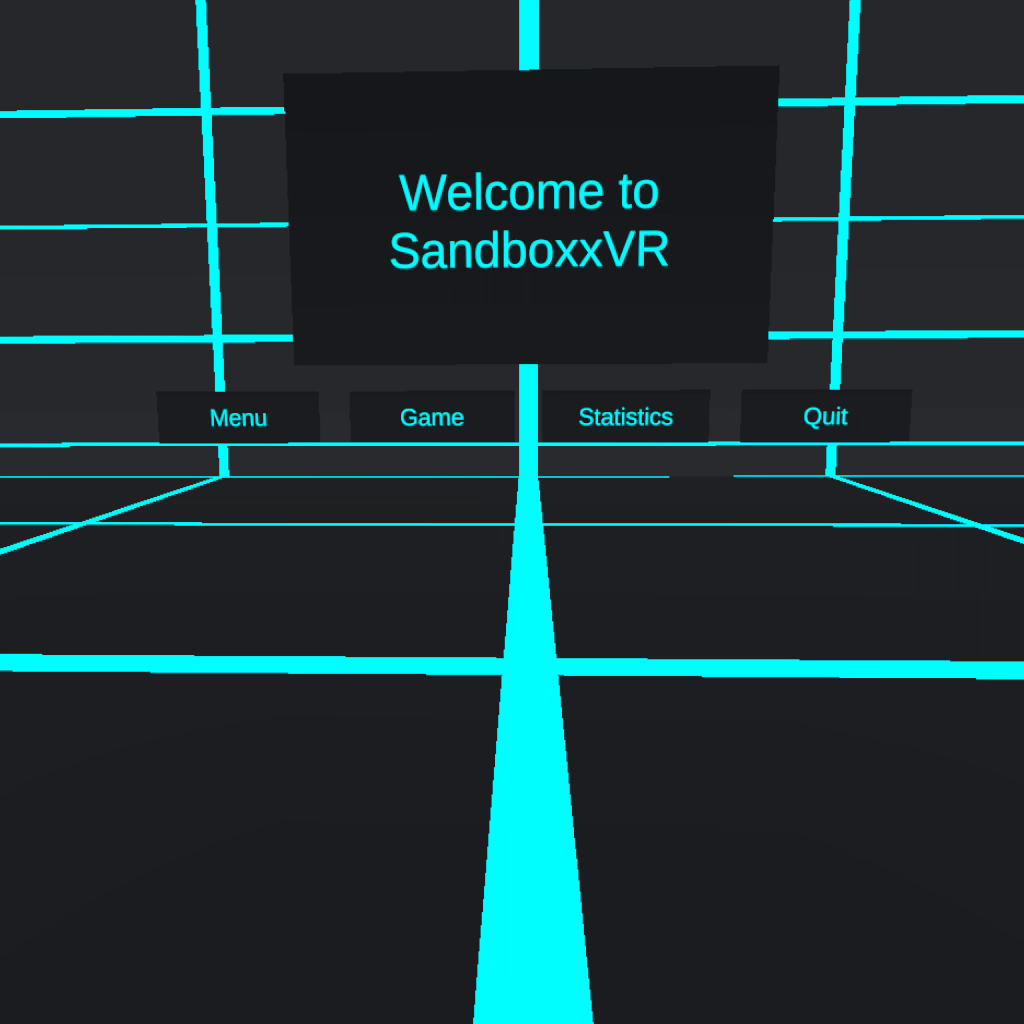
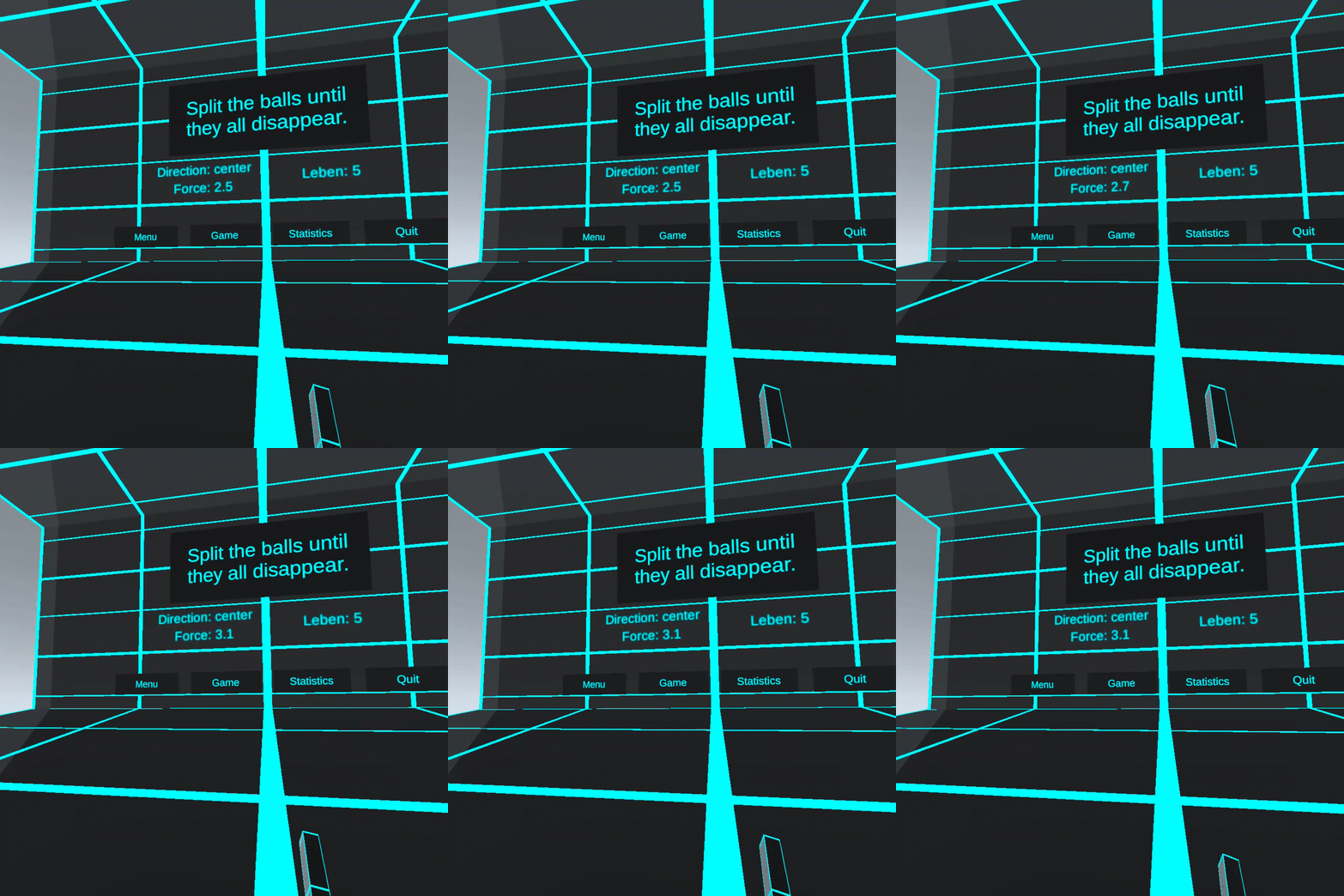
After some tests, we came to the conclusion that the player is too static with this mechanic and almost doesn’t need to move. So we decided to replace the laser beam with a kind of sword. This forces the player to move more. He first has to wait until the balls come towards him and then he also has to move more than before.

Achievements
We have found a good way to support patients in their rehabilitation with the help of a VR application. In our tests with healthy volunteers, the Exergame was very well received. Unfortunately, we have not been able to test the Exergame on real patients because of the corona pandemic.
The research management was very enthusiastic about the idea and our implementation of the project. We were promised that the exergame would be included for further testing and therapy purposes, which is a very positive perspective for our project.
 Portfolio - Simon Hermann (©2025)